JavaScript HTTP Client Libraries
HTTP client libraries for JavaScript enable asynchronous communication in both browser and Node.js environments. Axios provides a promise-based intuitive API, Fetch offers the Web standard API, and Superagent delivers a lightweight flexible implementation. They support various protocols including REST API, GraphQL, and WebSocket.
GitHub Star Comparison
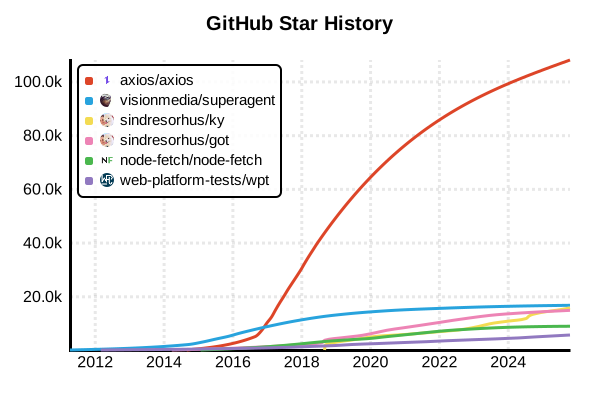
| No | Name | GitHub Stars | Description | Trend | License | Type | Official Site |
|---|---|---|---|---|---|---|---|
| 1 | Axios | - | Most popular HTTP client library for JavaScript/TypeScript. Features promise-based API, request/response transformation, automatic JSON handling, interceptors, error handling, and timeout capabilities. Works in both browser and Node.js environments with extensive configuration options. | Maintains overwhelming popularity as the standard JavaScript HTTP client in 2025. Records over 40 million weekly downloads and is particularly favored in enterprise development. Essential for complex API communication due to its rich feature set and stability. | MIT | Promise-based | Official |
| 2 | Fetch API | - | Native HTTP client API available in modern browsers and Node.js 18+. Lightweight with zero dependencies, standardized web platform API. Promise-based with flexible control through Request/Response objects and streaming support. | Rapidly expanding adoption as native solution in 2025. Particularly popular in Edge Computing environments and projects prioritizing bundle size. Becoming default choice in modern frameworks like Next.js and Vite, leading the dependency minimization trend. | Web Standard | Native API | Official |
| 3 | Ky | - | Lightweight HTTP client for modern browsers, Node.js, and Deno. Built on Fetch API while providing more user-friendly API and extended features. Full TypeScript support with built-in auto-retry, timeouts, JSON processing, and hooks functionality. | Gaining rapid attention as improved version of Fetch API in 2025. Highly valued especially by TypeScript developers and modern JavaScript environments, increasingly chosen as lightweight alternative to Axios. Achieves balance between bundle size and developer experience. | MIT | Fetch-based | Official |
| 4 | Got | - | High-performance HTTP client library for Node.js. Provides rich features equivalent to Axios while achieving superior performance. Supports streaming, advanced error handling, auto-retry, caching, and all APIs including promises, streams, and callbacks. | Established position as leading high-performance HTTP client candidate in Node.js environment in 2025. Increasing adoption as performance-focused choice especially in API server and microservices development. Gaining attention for combination of rich features and high speed. | MIT | Node.js-focused | Official |
| 5 | node-fetch | - | Fetch API polyfill implementation for Node.js. Provides the same interface as browser's Fetch API in Node.js environment, enabling code sharing and portability. Offers consistent development experience between browser and server with lightweight, standards-compliant API. | Traditional role decreased in 2025 due to native Fetch API support in Node.js 18+, but remains important for legacy environments and specific use cases. Valuable for compatibility maintenance during transition period to ESM and Fetch API standardization. | MIT | Polyfill | Official |
| 6 | SuperAgent | - | Lightweight and flexible HTTP client library for Node.js and browsers. Enables intuitive request building through chainable API. Provides features like plugin system, automatic parsing, multipart support, and progress tracking. | Maintains stable popularity as veteran HTTP client in 2025. Particularly valued for readable chainable API, continuously adopted for learning purposes and medium-scale projects. Market share gradually declining due to rise of modern alternatives. | MIT | Chainable API | Official |