Ruby Logging Libraries
Ruby logging libraries center around Rails' standard logger with more advanced implementations. Semantic Logger, Lograge, and others provide features specialized for Ruby on Rails applications including structured logging, performance improvements, and optimized Rails integration.
Key Features
- Multiple Output Levels
- Structured Logging
- High Performance
- Multiple Output Destinations
- Rich Ecosystem
Representative Libraries
- Pino: Ultra-fast JSON logging library
- Winston: Most versatile logging library
- Bunyan: Structured JSON-focused logging library
- Morgan: Express.js HTTP logging middleware
GitHub Star Comparison
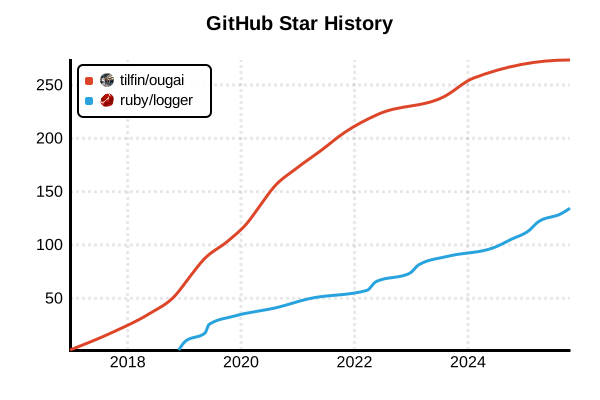
| No | Name | GitHub Stars | Description | Trend | License | Type | Official Site |
|---|---|---|---|---|---|---|---|
| 1 | Semantic Logger | - | Comprehensive logging interface for Ruby and Rails. Simultaneously outputs human-readable colorful text logs and machine-readable JSON logs. Achieves high-performance processing (thousands of lines per second) through simultaneous writing to multiple destinations and in-memory queues. | Established position as recommended choice for modern Ruby applications in 2025. Track record with 12 years of history and 62 contributors enables handling of complex Rails requirements. Provides dedicated appenders for Sentry, syslog, DataDog, Splunk, etc. | Apache-2.0 | Structured Logger | Official |
| 2 | Logger (Standard Library) | - | Logging functionality in Ruby standard library. Provides basic logging features without external dependencies. Supports log levels, rotation, and custom formatters. Suitable for simple Ruby applications and scripts. | Usage continues for small-scale Ruby projects and learning purposes in 2025. Sufficient for simple requirements, but migration to more feature-rich libraries recommended for full-scale web applications and Rails projects. | Ruby License | Built-in Logger | Official |
| 3 | Lograge | - | Popular gem improving verbosity of Rails default logging. Combines multiple log entries into single line, generating clean, machine-readable output. Optimal for noise reduction and structured logging in production environments. One of all-time great Rails gems. | Continues as standard choice for new Rails projects in 2025. Recognized as essential gem alongside devise, timecop, and rails_admin. Significantly contributes to noise reduction and readability improvement in production environment log management. | MIT | Rails Logger | Official |
| 4 | Ougai | - | Well-known choice for structured logging in Ruby. Extends standard Logger class and adds useful features such as pretty printing, child loggers, JSON logging, and exception handling with stack traces. Library specialized in structured logging. | Selection examples continue in Ruby projects requiring structured logging in 2025. Lighter compared to Semantic Logger but with limited features. Adoption seen in medium-scale projects requiring basic structured logging functionality. | MIT | Enhanced Logger | Official |
| 5 | Rails Default Logger | - | Standard logging functionality in Rails. Automatically outputs detailed logs in development environment and minimal necessary logs in production. Includes information such as SQL queries, controller actions, and rendering times. Immediately available without configuration. | Important as basic debugging means during development stage in 2025. However, verbosity becomes issue in production environment, so replacement with Lograge or Semantic Logger is common. Still holds value for Rails beginners in learning stage. | MIT | Framework Logger | Official |
| 6 | puts / p (Basic Output) | - | Ruby's standard output methods. puts outputs strings, p outputs inspect method results of objects. Used as simplest debugging means for temporary log output in learning stages and simple scripts. Inappropriate for full-scale logging. | Usage continues in learning and prototyping stages in 2025. Used by Ruby beginners and for quick debugging, but migration to dedicated logging libraries strongly recommended for full-scale application development. | Ruby License | Native Method | Official |